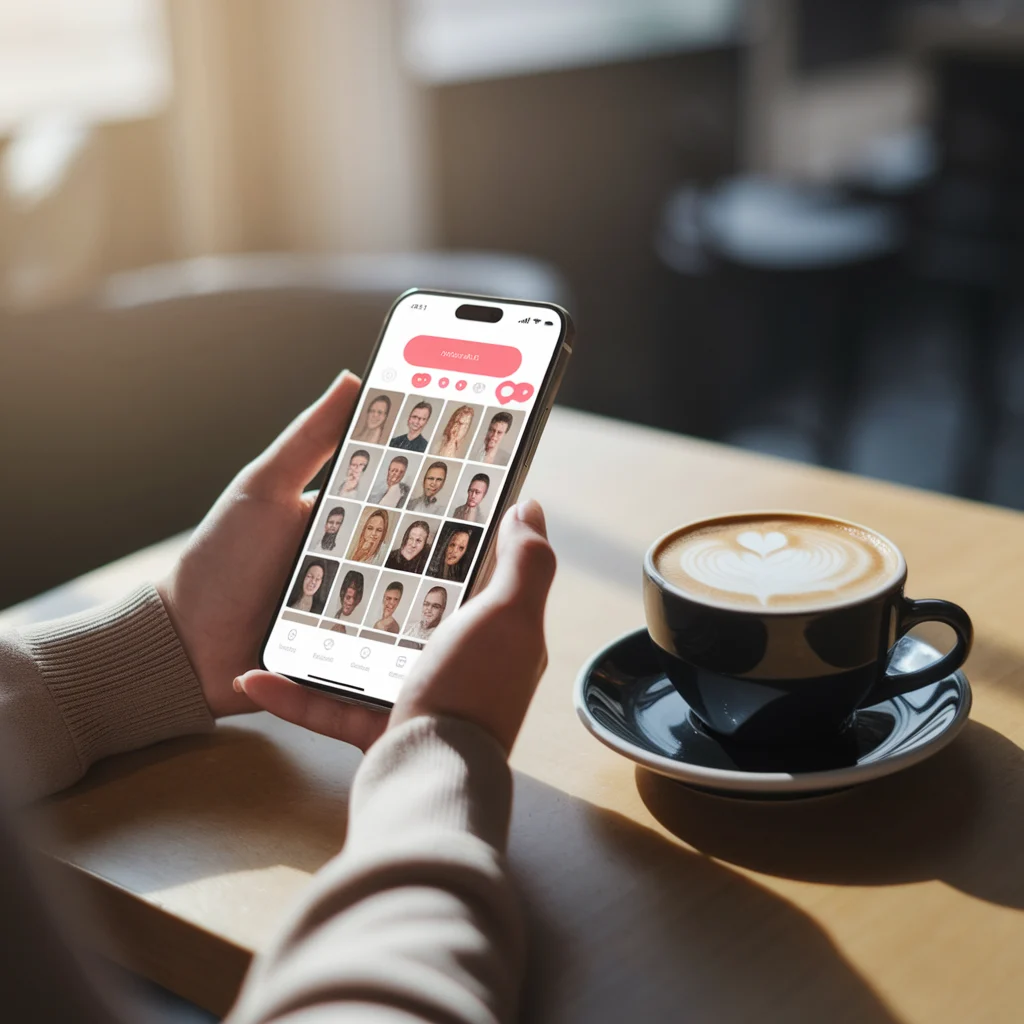

Why Most Dating App Openers Get Ignored: Cognitive Load
Let’s start with a hard truth. The reason your match queue feels like a ghost town isn’t because you’re uninteresting. In practice, the single biggest reason openers fail is something psychologists call cognitive load. Essentially, it’s the amount of mental effort required to complete a task. Your opener is that task.
Think about it. When you send “Hey” or “How’s your week?”, you’re handing them a blank page and asking them to write the first chapter. This is high cognitive load. Consequently, they have to stop, think of something interesting to say about their boring Tuesday, and carry the entire conversation. Most people, especially those with dozens of matches, will simply skip it for an easier, more engaging option.
On the other hand, the best dating app openers work because they do the opposite. They reduce cognitive load by making it incredibly easy and even fun to reply. They provide a clear path for the conversation to follow. Understanding this simple principle is the most important step to getting more responses. Now, let’s break down how to build an opener that minimizes their effort and maximizes your chances.
The Anatomy of a Perfect Opener: The 3-Part Formula
Forget cheesy pickup lines and generic compliments. A high-converting opener is a simple, repeatable formula that shows you’ve paid attention and are genuinely interested in starting a conversation. It’s not about being a comedian; it’s about being an observant and engaging person.
Step 1: Reference a Specific Profile Detail
First, scroll through their photos or prompts and find one thing that genuinely catches your eye. This immediately proves you’re not just spamming every profile you see. It could be a travel photo, a quirky hobby mentioned in a prompt, or even the type of dog they have.
- Bad: “I like your photos.” (Too general)
- Good: “That photo of you hiking in Peru looks incredible.” (Specific and personal)
Step 2: Ask an Easy, Open-Ended, or Choice-Based Question
Next, you need to make it easy for them to respond. Avoid questions that require a long, thoughtful answer. The best way to do this is with an “either/or” question or a simple open-ended question directly related to the detail you mentioned. This is where you lower that cognitive load we talked about.
Let’s use a specific, practical example. Their profile has that Peru photo.
- High Cognitive Load (Bad): “What was your favorite part about Peru?” (Requires them to recall memories, organize thoughts, and type a paragraph).
- Low Cognitive Load (Good): “Okay, hypothetical trip: are you choosing another epic hike like Machu Picchu or relaxing on a beach in Thailand?” (Gives them a simple choice that also reveals their personality).
Step 3: Add a Dash of Your Personality
Finally, you can add a little something that shows who you are. This can be a short comment, an emoji, or a bit of humor. This isn’t always necessary, but it helps the opener feel less like an interview and more like a real human interaction. For instance, you could add to the Peru example: “Asking for a friend who is a terrible vacation planner (it’s me).”
Choosing Your Opener Style: A Comparative Guide
Not every opener fits every personality or situation. Your best option depends on your own style and the vibe you get from their profile. In short, deciding how to choose the right approach is a key skill. Below is a comparison of the three main archetypes of effective openers.
This table breaks down the pros, cons, and when to use each style, helping you select the best dating app openers for different matches.
| Opener Style | Pros | Cons | Best For… |
|---|---|---|---|
| The Observational Question | Shows you’re attentive, personal, and genuinely interested. High success rate. | Takes more time and effort to craft for each match. | Hinge, Bumble, or any profile with rich details and prompts. |
| The Playful/Funny Opener | Great for showing off your humor and standing out. Can create an instant fun vibe. | Humor is subjective and can easily fall flat or be misinterpreted. High risk, high reward. | Tinder or profiles that have a lighthearted or sarcastic tone. |
| The Direct & Confident Opener | Communicates clear interest and confidence, cutting through the noise. Respects their time. | Can come across as too aggressive or forward if not calibrated correctly. | When you have a strong mutual match and their profile indicates they’re looking for something serious. |
As you can see, the observational question is often the most reliable choice. However, don’t be afraid to mix it up based on the context. Up next, we’ll see how this applies to specific apps.
Platform-Specific Openers That Work in 2026
A great opener on Hinge might not work as well on Tinder. Each app has its own culture and user expectations. Therefore, adapting your first message is crucial for getting a response. Here’s how to tailor your approach for the major platforms.
Hinge: The Prompt-Driven Conversation
Hinge is designed for conversation. Its entire structure, built around prompts and comments, is a gift for crafting the perfect opener. The work is already done for you. The best strategy here is to ignore their photos initially and go straight for their prompt answers.
- Example: If their prompt is “My most controversial opinion is… pineapple belongs on pizza,” you can reply with, “A fellow pineapple-on-pizza truther! We’re already off to a great start. What’s your go-to pizza order?”
Tinder: Cutting Through the Noise
Tinder is faster-paced and more visually driven. Because of this, many users have shorter attention spans. Your opener needs to be quick, catchy, and engaging. Funny or playful openers often perform well here, as do simple observational questions about a photo.
- Example: If they have a picture with a dog, you could say, “I’m not sure who’s cuter, you or the golden retriever. I’ll let the dog break the tie.”
Bumble: Empowering the First Move
On Bumble, women make the first move. If you’re sending that first message, the pressure is on to say something more than “hey.” The best Bumble openers are confident and direct, yet still engaging. Since they’ve already shown interest by matching, you can be a little bolder.
- Example: “Okay, love your style. If we were to grab a drink, would you pick a classy cocktail bar or a low-key brewery?” This is a great way to start planning a date from the first message.
Common Mistakes to Avoid With Your Dating App Openers
Sometimes, what you *don’t* do is just as important as what you do. A common mistake is thinking that any effort is good enough. In reality, a bad opener can get you unmatched faster than no opener at all. Here are the top errors to steer clear of.
Mistake 1: The Generic Compliment
“You’re beautiful” or “Wow, so cute” is the equivalent of a verbal shrug. It’s generic, low-effort, and focuses solely on looks. Furthermore, it puts pressure on them to respond with a simple “thanks,” which kills the conversation before it starts.
Mistake 2: The Interview Question
Avoid boring, logistical questions like “How was your day?” or “What do you do for work?” These feel like a job interview and are devoid of any fun or personality. You can get to those details later, after you’ve established a connection.
Mistake 3: Being Negative or Sarcastic
Your first message sets the tone. Starting with a complaint about the app, dating in general, or a sarcastic jab at their profile is an instant turn-off. Keep things positive and light. Nobody wants to engage with negativity from a stranger.
Mistake 4: Overwhelming Them with a Wall of Text
Your opener should be a door, not a ten-page letter. Keep your first message concise, ideally two to three sentences. A huge paragraph is intimidating and signals that you might be overly eager or intense. Keep it short, sweet, and easy to digest. A good opener is just the beginning; it doesn’t need to tell your life story.
Frequently Asked Questions about Dating App Openers
What is a good opener for online dating?
A good opener for online dating is one that is personal, references something specific from their profile, and asks a simple, engaging question. The goal is to show you’ve paid attention and to make it easy for them to reply.
- It should be more than a single word like “Hey.”
- It should focus on starting a conversation, not just giving a compliment.
How do I get a response on a dating app?
To get a response, focus on sending messages that have low cognitive load. This means asking questions that are fun and easy to answer. A message with a simple A/B choice or a lighthearted question about a hobby in their photo is far more likely to get a reply than a generic greeting.
- Personalize every single opener you send.
- Avoid boring questions about their day or week.
What is the 333 rule in dating apps?
The 333 rule is a user-created guideline for messaging etiquette on dating apps, although it’s not universally known. It typically suggests sending a message on day one, a follow-up on day three if there’s no reply, and then moving on after that. However, its effectiveness is debated.
- Some find it a good way to show interest without being pushy.
- Others prefer to send one great message and leave the ball in their court.
What does ggg mean in dating?
GGG stands for “Good, Giving, and Game.” It was originally coined by sex columnist Dan Savage to describe an ideal partner’s attitude towards intimacy. It means being good in bed, giving of equal time and pleasure, and being game to try new things (within your own boundaries).
- It’s a term used to describe a healthy, open, and enthusiastic sexual attitude.
- It emphasizes mutual respect and adventure.
Conclusion
Ultimately, mastering the art of the first message isn’t about finding a magic, one-size-fits-all line. It’s about shifting your perspective from “What can I say to impress them?” to “How can I make it incredibly easy for them to talk to me?” The core principle is reducing cognitive load by being specific, personal, and asking simple, engaging questions.
Instead of endlessly swiping, your next step is to put this into practice today. Open your app, pick one match you’re genuinely interested in, and find a single detail in their profile. Now, craft a simple either/or question about it. You’ll be surprised how much your response rate improves when you start the conversation you’d actually want to have.